
Get your stories seen by millions online.
Post Release
No1 Press Release Distribution Service in the Philippines
No1 Press Release Distribution Service in the Philippines



Xpress gains global recognition, positioning Philippine mobility on Asia’s innovation stage
...
Xpress Super App earns global recognition at the Forbes Asia 100 to Watch Forum 2026, reinforcing its position as a rising Philippine mobility platform. With its electric-first strategy and expanding footprint, Xpress signals a new phase of scalable, tech-driven transport across Southeast Asia.
Singapore - April 22, 2026 - At the Mandarin Oriental, Singapore, where this year’s gathered founders and investors from across the region, a quiet consensus seemed to emerge.
Momentum, increasingly, is uneven.
Some markets are accelerating faster than others. And a small group of companies is beginning to position itself not just to ride that growth—but to shape how it moves.
Among them is the Philippines’ Xpress Super App.
Included in the , Xpress is part of a cohort that has come to function as a kind of early signal—companies operating in fragmented markets, finding ways to scale where infrastructure has traditionally lagged.
Mobility in Southeast Asia has long been framed as a question of scale. More drivers, more riders, more cities. But scale alone is becoming less decisive.
What appears to matter more now is coordination—how efficiently platforms move not just people, but behavior and demand across uneven systems.
Xpress has been leaning into that transition. Backed by , the platform has expanded its presence across transport hubs and tourism corridors, deploying electric vehicles alongside smaller-format e-trikes while building out a cashless layer designed to accommodate both local users and international visitors.
In places like Boracay, where transport demand fluctuates with seasonality and geography imposes natural constraints, that kind of coordination begins to look less like convenience and more like infrastructure.
The forum’s theme—“Seizing The Momentum”—reflected a broader shift underway. Discussions ranged from artificial intelligence to capital strategy, but much of the focus returned to a familiar challenge in emerging markets: how to scale efficiently without relying on legacy systems.
It is within that context that companies like Xpress start to take on a different shape. Not as standalone ride-hailing platforms, but as part of a wider transition toward electrified, digitized mobility systems.
When transport becomes more predictable, adjacent sectors—tourism, retail, even urban planning—tend to follow.
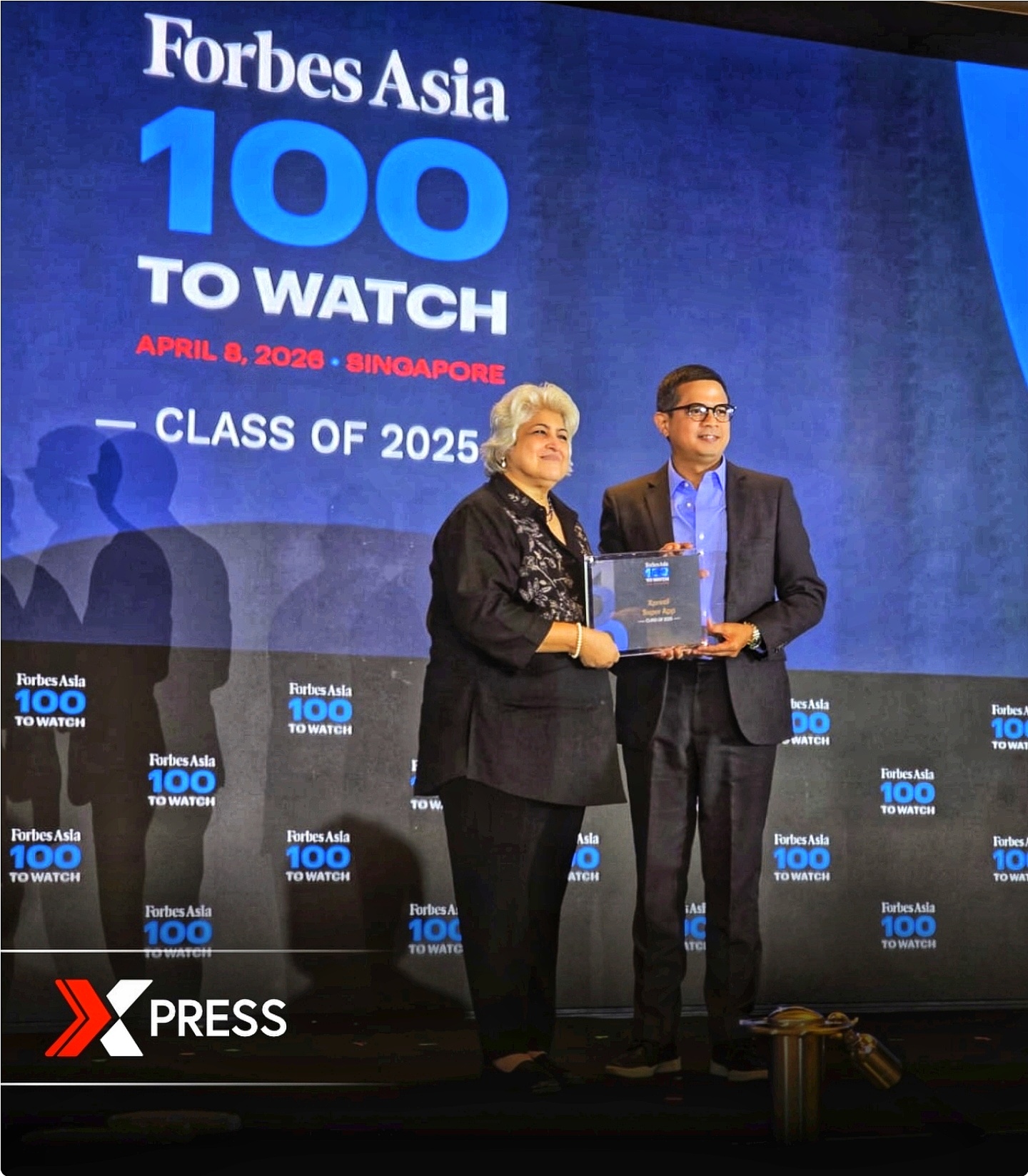
At the forum, , Mr. Cliff Cabungcal President of Xpress, accepted the recognition on behalf of the company. The moment itself was brief. The implications may be less so.
Inclusion on the list does not guarantee trajectory. But it does suggest a level of alignment—with where capital is flowing, where technology is being applied, and where new operating models are being tested under real-world constraints.
And constraint, in much of Southeast Asia, remains the defining condition.
The next phase of mobility in the region is likely to look different from the last. Less expansion for its own sake, more refinement—cleaner fleets, tighter systems, and more deliberate deployment of assets.
Electric vehicles reduce exposure to fuel volatility. Digital payments widen access. Integrated systems create leverage across markets that have historically resisted standardization.
Individually, these shifts are incremental. Taken together, they begin to compound.
Which may be why, in rooms like this one in Singapore, attention tends to settle on companies that are not only growing—but quietly reorganizing the conditions around them.
Xpress, it would seem, is moving in that direction.
MITCH X
mitch.m@xpress.com.ph
+639209194304
Get your stories seen by millions online.
Post Release
URL Copied.
 Download image
